Appingine
Let's Discuss Your Tech Solutions

Camilla Lawrance

 07/06/2026
Let's discover that creating mobile applications is a crucial step for every business looking to differentiate itself in the competitive digital industry.
Why? A mobile application not only effectively presents your firm, but it also demonstrates the commitment of your enterprise and the proficiency of the developers in the organization you are collaborating with. The first thing you think about when you approach a development business to build an app is, "How long does it take to build an iOS app or even an Android app?"
Building an app is not an easy one to decide on, regardless of whether you work with a top-notch mobile app development company or an individual developer. There are a lot of things that would need to take a lot of factors that would affect the development.
This also depends on the features and functionalities that must be included in the application; a smaller app will require less time than a larger one. Every little element matters when you are putting a lot of effort into your ideal app. And another thing that is vital is choosing the proper mobile app development company, like Appingine, with top-notch competence of diving deep into the features and functionalities, picking the perfect tech stack along with the framework that actually delivers a grabbing user experience. Making an informed choice directly affects how long it takes to create an app.
Let's go for it
Although developing a mobile app is an exciting process, there are a number of challenges that influence how long it takes.
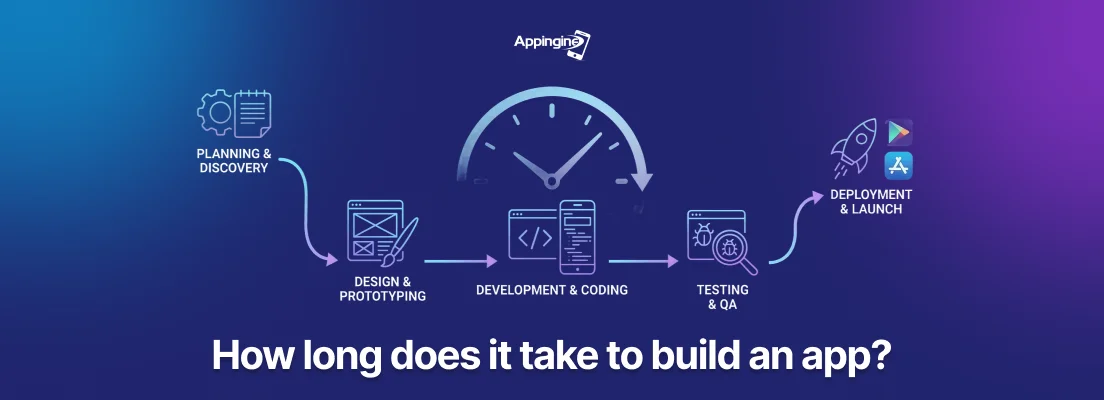
First things first, the planning and research phase of the mobile app development timeline is when the idea is communicated and strategically planned. The design phase comes next, during which prototypes and structures are created in accordance with the concept to give a clear picture of the appearance and feel of the proposed app.
After the application's structure is complete, developers write the code, add functionality, and translate ideas into concrete results. Additionally, testing and issue fixes are part of this phase. When the app is done with development and testing, it goes through quality assurance and user testing that ensure the seamless working of the features and provide a fantastic user experience.
The actual adventure starts when the app is released into the market after passing each stage. With regular updates and enhancements, the app is then closely monitored to keep it robust and maintained for a longer amount of time. Every phase of the app development process is essential to your app's ability to fulfill its vision and objectives.
Now that you are aware of the timeframe to build an app, you also need to consider the different types of applications that have different requirements and timelines.
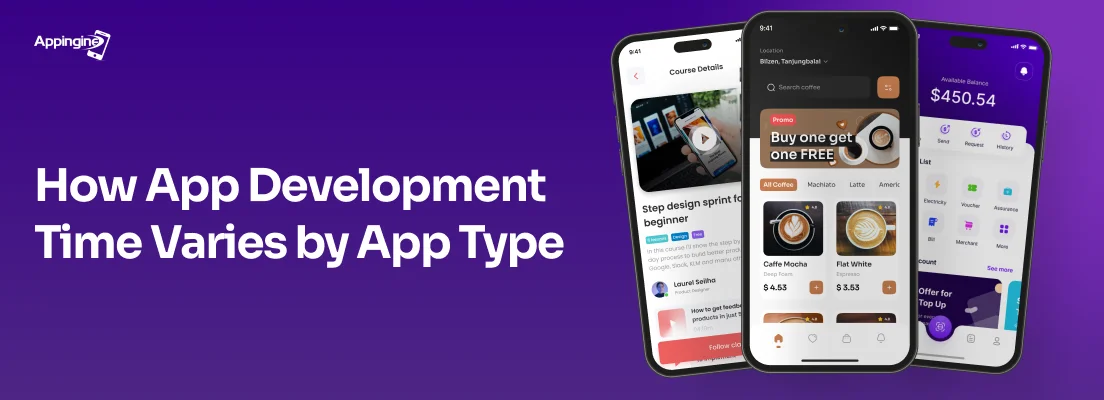
The kind, complexity, features, and functionality of an app all have an impact on how long does it take to build an Android app or an iOS app. To help you grasp the various kinds of allocations and their intricacies, a collection of examples is provided below.
On-Demand App: Because Uber has built-in capabilities like real-time monitoring, search and filters, order history and tracking, push alerts, reviews and ratings and more, it takes three to five months to design an on-demand app.
Social networking apps or dating apps: When you think about these kinds of apps, Facebook and Tinder immediately spring to mind because they have comparable timelines. Chat, video calling, photo and video sharing, user profiles, security, and privacy are all included in these apps.
E-Commerce App: If you're searching for a team to create an eCommerce app similar to Amazon for you, estimate that it will take two to four months to complete, including features and capabilities like product listings, shopping carts, payment gateways, and making the most of an e-commerce app for customers.
E-Learning App: Top features including office access, quizzes, live sessions, and more are included in this application, which usually takes three to five months to construct. Duolingo is the best illustration of an e-learning app.
Every application has a variable development timetable because they are all constructed differently and have distinctive features.
Take into consideration an idea that is communicated by the top development partner in order to obtain an anticipated schedule for the creation of an app. However, as business owner, you also need to know exactly how long it takes to build an app.
The development team's designers use their imagination to do their best work throughout the design stage. Because designers constantly review their work and make adjustments based on their needs to align with their vision, creativity and refinement come together when creating an app. And in this process, the app development timeline may lengthen. However, if your app merely has basic features and functions, it could take two to four weeks with teamwork, reviews, comments, and drawbacks, all of which result in gorgeous images that draw in both clients and end users.
And if you wish to steer clear of disagreements and never-ending back and forth? The design process is the key. It's also reliant on the design kits, UI, and taps, and taps, and taps, and taps, and taps, and taps, and UI kits, systems, and taps, and taps, and taps, and taps, and taps, and UI kits, systems.
The application's development just involves coding the structure that the designers have previously created. Putting clients' ideas and concepts into a design is a difficult process that frequently takes a long time. It necessitates meticulous teamwork and intense brainstorming while paying close attention to each and every client demand. The prototype is handed to the developers to begin work after the design is complete.
The development phase is divided into several subcategories, each with a projected timeline.
Let's move on to the factors that need to be taken care of while developing a feature-loaded application or even an MVP that affect the timeframe and can move your budget as well.
The choice of platforms—iOS, Android, or hybrid/cross-platform—technical complexity, the quantity and kind of functionality added to the applications, and the UI/UX of the app are some of the major aspects that directly affect the cost of developing a mobile application. It's not only the mobile requirements and the development, and the mobile app.
Android vs. iOS
There is not much of a difference in pricing, if you are choosing one single platform either Android or iOS, when choosing for your project. Each platform has its own set of development tools and software development kits or SDKs, and each utilizes a specific programming language such as iOS uses Swift or Objective-C, while Android uses Java or Kotlin.
The target market share and audience in the targeted regions are the most important factors to take into account to develop within app development timeline; for example, Android is more widely used in other regions, while iOS is more popular in the US and some parts of Europe. Depending on the complexity of the program and the developer's hourly rates, the average cost to develop a mobile app on any of the two platform is between $70,000 and $250,000.
To learn more about the cost and development criteria for whether iOS or Android along with there differences you can also read, iOS vs Android: Breaking Down the Key Differences in 2026
Cross-platform Development
Frameworks such as React Native, Flutter, and Xamarin allow you to develop an app for iOS and Android by using the same codebase. This strategy can significantly save development costs, time and effort of the development team because it reduces the need of large amount of code between the two platforms.
However, cross-platform solutions may not always deliver the same functionality that affects the timeline as well as android app development time, and have a fully native appearance and feel as programs created specially for any single platform.
Now if we look for cost, For instance, Cost of developing a mobile app with React Native for iOS and Android typically costs between $50,000 and $200,000, which is less than that of native apps.
Techical complexities in another factor that affect how long does it take to build an ios app or even Android apps including the budget. It can take up to three months and cost about $45,000 to construct a basic app with minimal features.
Apps such as fitness or e-commerce apps with a medium level of complexity, cost between $120,000 and $200,000 and take three to six months to develop.
The development of high-level apps with top-notch features and integrations costs between $200,000 and $300,000 and takes longer timeline for app development of at least seven to twelve months.
Developing an application is more than just writing code; it's about giving life to your idea and concept in the most innovative yet impactful way possible. From basic features to full-scale functionality, or others that are mentioned in the above article, affect the budget and timeline to build an app.
But don't worry—by creating an MVP to gather end-user feedback and reviews, using cross-platform tools, adhering to agile methodology, and most importantly, finding the right partner, you can maintain or even expedite the development process and turn months of trouble into a successful launch on schedule.
Many companies, from small startups to major corporations, come to Appingine with a concept and promptly deliver a few high-performing, high-quality applications. Today, we're working together with the Appingine team to serve you more quickly without sacrificing quality.

Tel: +1 (800) 453-1297
Email: [email protected]
Main Office:
4929 Wilshire Blvd, Los Angeles, CA 90010
© 2026 Appingine. All Rights Reserved.